

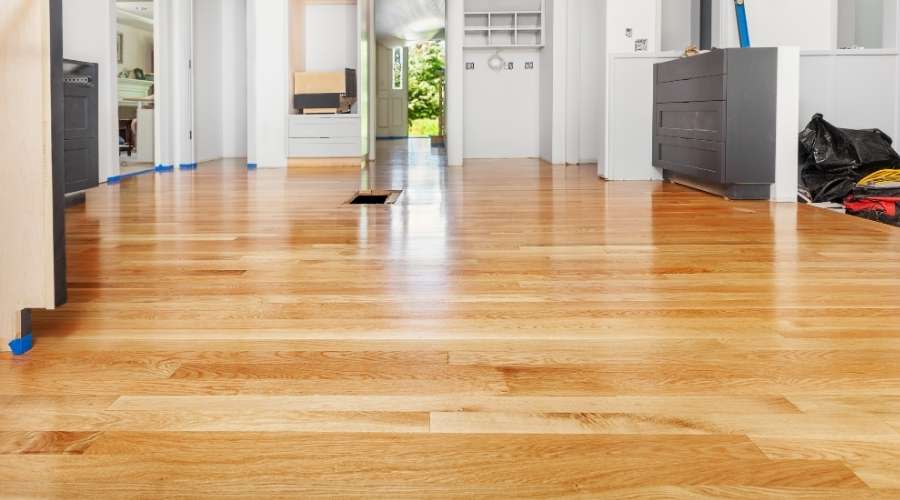
If your Kailua-Kona home was built in the 1980s or 90s — and a large share of Big Island homes were — there is a good chance the hardwood underfoot has taken decades of island living: bare feet, beach sand, humidity swings, and afternoon sun through the lanai doors. At some point every homeowner asks the same question: is it time to refinish these floors, or should we replace them entirely?
It is one of the most common calls we get at Floor Expert's hardwood refinishing service in Kailua-Kona. The honest answer is that it depends on a handful of specific things about your floor — and this guide walks you through every one of them, with a quick diagnostic, a look at what actually happens during a sanding, and a side-by-side of cost, time, and disruption. By the end you will know which direction makes sense for your home before you ever pick up the phone.
Start Here: The Refinish-or-Replace Diagnostic
Answer the four questions below about your floor. There is no wrong answer — the tool simply weighs the factors the way our certified installers do and points you toward the most sensible option for a Big Island home.
Whatever the tool suggests, a certified set of eyes on the actual floor is the real deciding factor — which is exactly what a free in-home assessment gives you. Our team is NWFA and CFI certified, so the moisture testing and species identification are done properly for the island climate.
How Refinishing Actually Works (and When You Run Out of Floor)
Refinishing means sanding off the old finish and a whisker of the wood beneath it, then re-staining and re-sealing. The catch is that you can only do it so many times, because there is a limited amount of solid wood above the tongue-and-groove. Tap the two floor types below to see why solid and engineered floors have very different lifespans.
Solid hardwood is wood all the way down, so most floors can be refinished four to six times across their life. If yours is solid and has only been done once or twice, refinishing is almost always the smart, lower-cost choice.
Engineered wood has a real-wood veneer bonded to a stable core. A thick veneer may allow one to three light refinishes; a thin one may allow zero. Once you reach the core, replacement is the only option. If you are unsure how thick your veneer is, that is a great thing to have checked before spending on a sanding that could go through.
Refinish vs. Replace: Cost, Time, and Disruption Compared
When both are genuinely on the table, these are the trade-offs that decide it. Tap through each factor.
Refinish
Lowest upfront cost — you are paying for labor and finish, not new material. Usually the budget-friendly path when the wood is healthy.
Replace
Higher upfront cost — new material plus tear-out and install. Costs more now but resets the clock and lets you change material.
Refinish
Typically a few days per area, plus cure time before furniture returns. Dustless sanding keeps it cleaner than most expect.
Replace
Longer — removal, subfloor prep, acclimation, and install. Plan for a larger window, especially for a whole-home project.
Refinish
Contained to the rooms being sanded; you keep your existing floor. Least invasive way to make old wood look new.
Replace
More involved — baseboards, transitions, and sometimes door undercuts. Bigger change, bigger reward if the old floor is failing.
Refinish
Buys many more years from a solid floor — but only while sandable wood remains above the tongue-and-groove.
Replace
A full reset. New hardwood, or a switch to waterproof luxury vinyl, starts a fresh multi-decade lifespan.
Refinish
Best for solid floors with surface wear, dullness, or an outdated color — and for keeping original character.
Replace
Best for water damage, cupping, over-sanded or thin engineered floors, or when you want a new material for a wet Kona room.
Clear Signs It Is Time to Replace
Some conditions take refinishing off the table no matter how much you love the original floor. In our experience across Kailua-Kona, Holualoa, and Waimea homes, these are the tell-tale signs:
- Cupping or crowning — boards curling at the edges or humping in the middle usually points to a moisture problem underneath that sanding will not fix.
- Water or pest damage — soft spots, staining, or subfloor issues need to be opened up and corrected, not covered over.
- Repeated past refinishes — if the floor has already been sanded several times, there may not be enough wood left to do it safely.
- Thin engineered veneer — once the real-wood layer is gone, there is nothing left to sand.
- You want a moisture-proof material — for kitchens, baths, and lanai-adjacent rooms, many Kona homeowners replace tired wood with waterproof flooring that shrugs off island humidity.
If You Replace: Great Options for Big Island Homes
Replacing does not have to mean giving up the wood look. Many homeowners move to luxury vinyl plank that mimics hardwood but is fully waterproof — ideal for the humidity and indoor-outdoor living here. Others upgrade to new hardwood or explore exotic and engineered hardwood for a fresh species and color. If you are torn between materials, browse ideas in our inspiration galleries or bring the decision to our Kailua-Kona showroom.
Whichever way you go, the work is only as good as the crew. Every install and refinish we do is handled by our certified team, and we back it with the same standards that earned Floor Expert its five-star reputation across the Big Island. You can read what neighbors say on our reviews page.
Frequently Asked Questions
The clearest way is to look at an exposed edge — at a floor vent, a doorway threshold, or where the floor meets the stairs. Solid boards are the same wood top to bottom; engineered boards show thin horizontal layers like plywood. If you cannot tell, our team identifies it during a free assessment.
Yes. The Big Island's humidity and coastal air are hard on wood, and moisture problems are a common reason a floor cannot simply be refinished. Proper moisture testing before any work — something our NWFA-certified installers always do — prevents a beautiful new finish from failing a season later.
Absolutely. Refinishing is a great time to go lighter, darker, or more current without the cost of replacement — as long as the floor has enough sandable wood left. It is one of the most cost-effective ways to modernize a Kona home.
Yes — we offer financing options to help larger replacement projects fit your budget. Ask our team for details when you request your estimate.
Not sure which way to go? Let a certified Floor Expert installer inspect your floor in person — free of charge — and give you a straight answer plus an exact estimate for your Kailua-Kona home.
Request Your Free Estimate →


